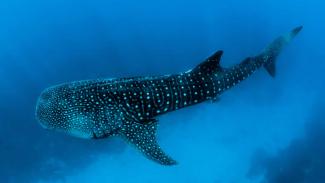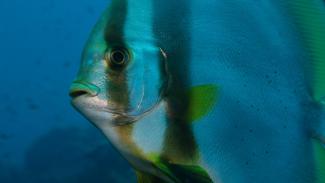
The remote Togian Islands lie in the middle of Tomini Bay in central Sulawesi. While difficult to reach, the islands offer great conditions for scuba-diving all year round.
Protected on almost all sides by the tentacle-like arms of Sulawesi, this large bay is reputably the calmest in the world.
The Togians islands are volcanic, with 3 main volcanic islands and numerous smaller islands. It is difficult to imagine a more picture perfect group of islands, with lush, jungle-covered slopes rising steeply out of deep blue water and interspersed with powder sand beaches.
Highlights


Best diving spots
The islands unique geography has created three distinct types of reefs - atolls, a barrier reef & fringing reefs - one of the few areas of the world where all three can be found in the same area. There are also a few endemic species here, which is thought to date back to a time when the bay was cut off from the outside world.
There are numerous fascinating dive sites here, some for experienced divers and others for novices. Batu Gila, is one for the experienced divers - a deep, current swept ridge where sightings of Sharks, Rays, Tuna & Barracuda are common. The Scalloped Hammerhead sometimes pays a visit here too.
Dominic Rock is another deep dive with exciting fish action, while around Una Una - an active volcano that last erupted in 1984 - life is prolific with Turtles, Eagle Rays, Napoleon Wrasse, Bumphead Parrotfish, Barracuda and reams of colourful reef-dwelling inhabitants.
Apart from the numbers & variety of fish, many visitors to the Togians are amazed at the corals & sponges. Huge gorgonians & Whip Corals stretch high into the blue to catch the current and majestic Barrel sponges sit imperiously on the reef, like huge ancient monuments. Some are thought to be well over 100 years old.
Pasir Tengah is one of the Togians atolls, plunging from the surface to around 400m. The coral covered walls here are spectacular and there is normally plenty of action away from the reef as well. Taipi Wall is another dive with beautiful corals that is more suitable for inexperienced divers.
If you fancy a change from the reefs, there is also the wreck of a WWII plane in the Togians. The plane is in excellent condition, with the cockpit, turret gun & wings all intact. It was intentionally crash-landed after an engine caught fire during fighting with the Japanese. The wreck is home to schools of Jacks & Lionfish, but due to the proximity of the mangrove forests, the visibility can be quite low.
When to dive
Consistently calm conditions mean the area can be dived all year round.
Getting there
It is not easy to reach these remote islands, which is one of the reasons they are so pristine. The nearest airport is in Gorontalo to the north. This is connected with Makassar to the south and Manado to the north, both of which have connections to places in Indonesia and a few spots beyond.
If you are approaching from the north, then head to Gorontalo by bus, then make the lengthy ferry to the islands. There is also a speedboat option, but neither make the trip every day so check out the current schedule when planning your trip. Approaching from Makassar in the south, there are flights three times a week to Luwuk and from here it is posible to go by bus to Ampana before catching a ferry to the Togian Islands.
Activities
Aside from diving, simply enjoying the beautiful location and surrounding nature is activity enough. Trips can be made to some of the other islands and the snorkelling & sunsets are fantastic.
Resort and liveaboard options
Due to their remote location, these remain sleepy islands with little tourism development. For those that make the journey, there are a small number of dive resorts scattered around the islands to choose from, offering daily diving excursions to the best dive sites in the area.
You might also enjoy...
Puerto Galera
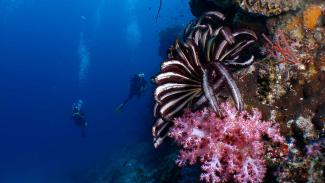
Originally a safe harbour during typhoons, Puerto Galera has become one of the Philippines' most popular tourist & diving destinations.
Situated only 150km south of the capital Manila, the curious geography of the area has created not only a perfect natural harbour, but also many picturesque beaches and coves to enjoy.
Setting up your underwater housing
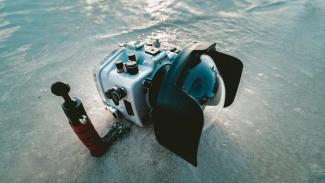
Have you recently purchased an underwater housing for your camera? Maybe you feeling a little unsure how to set-up your new system correctly and are feeling in need of some tips and advice.
Don't despair. No matter what brand your housing, whether it is a simple own-brand housing or a state-of-the-art set-up, there are steps you can take every time you take your camera into the water to ensure that it is set-up correctly.
Negros & Dumaguete
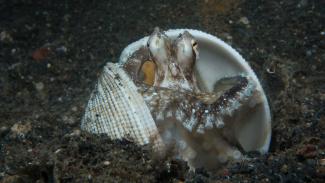
Negros Island is a large island in the Visayas. It’s eastern shore is separated from Cebu by a narrow channel, while it’s west coast faces the Sulu Sea. Much of the diving is in the south of the island.
Like many of the Philippines dive spots, it is blessed with the combination of big fish encounters and fascinating smaller critters that will keep avid divers happy for many dives.
How to photograph a Clownfish
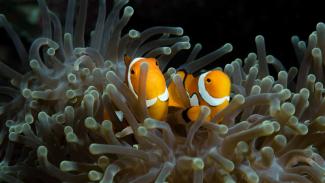
Clownfish are great subjects for underwater photographers.
Not only are they colourful and full of character, but they are also one of the most iconic and well recognised fish in the sea. A good Clownfish photo nevers fails to provoke a reaction from your audience.
They are also a very tricky subject to photograph, leaving many budding photographers frustrated.
So what can you do to get a great shot?
Mergui Archipelago
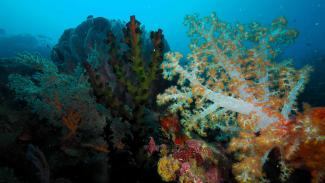
The 800 islands that comprise the Mergui Archipelago lie just off the coast of Myanmar in the Andaman Sea.
The islands, which can only be reached from Thailand, are only a fairly recent addition to liveaboard diving itineraries, and have not yet been completely explored. Those areas that are now well known to dive operators offer some exceptional diving.
Southern Leyte