Discover the diving at Sipadan and Mabul with our comprehensive dive guide
Tara North
Sipadan is Malaysia’s most famous diving spot. Nearby, Mabul Island offers more excellent diving for smaller marine life, and a good choice of dive resorts.
These nutrient-rich waters attract huge numbers of Turtles, while the area is also home to large number of White-tip Reef Sharks, Bumphead Parrotfish, Trevally and Barracuda.
Larger visitors such as Hammerhead Sharks & Manta Rays can also be seen, while Sipadan also sits within the coral triangle, ensuring a huge diversity of marine life to add to the area's attractions.
Highlights


Best diving spots
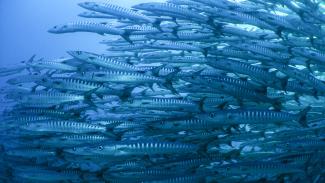
One of Sipadan’s most popular diving sites is Barracuda Point, which, as the name suggests, is a great place to see huge, swirling schools of Chevron Barracuda. Whitetip Sharks can be seen on the reef here, while occasionally Grey Reef Sharks & Eagle Rays cruise in the blue. As with all Sipadan’s diving sites Green Turtles are a very common sight.
South Point is another great spot for larger marine life and is famous for it's Hammerhead sightings, while the Drop-Off - a sheer wall plunging to great depths straight from the beach, is another fantastic spot. Currents can sometimes be strong at these sites though, so a little care is needed.
Large schools of Trevally can be seen on any site here and Bumphead Parrotfish are often heard crunching through the reef before they are seen. The Bumpheads can also be seen in procession on their way to 'work' for those that are prepared to wake up early.
West Ridge & Mid Reef, among others, have a profusion of corals and colourful reef-life. If you fancy something a little different, Turtle Cavern is a cave where many Turtles and other marine life have met their maker, leaving an eerie display of skeletal remains. If a turtle can get lost in here though, so can a diver - so do not enter without the proper safety precautions and take extreme care. Larger visitors such as Hammerhead Sharks & Manta Rays can also be seen, while the area also sits within the coral triangle, ensuring a huge diversity of life to add to the area's attractions.
Just a short distance away, Mabul & Kapali have reefs of a very different nature. Shallow fringing reefs are home to all manner of unusual critters, with Mandarinfish, Frogfish, Ornate Ghost Pipefish, Seahorses, Ribbon Eels and more, making these small islands one of Asia's current hotspots for macro lovers.
The combination of Sipadan's dramatic walls & big marine life, plus the unusual delights of Mabul & Kapalai are a tribute to this areas diversity & give the area a unique appeal for divers, making it one of Asia's top spots for diving.
When to dive
Sipadan's diving is excellent all year round. April through to December is the best time to dive, with July & August normally bringing the very best conditions.
Getting there
The gateway to Sipadan is;Tawau in Sabah, which has an airport. From there, many choose to Mabul Island or Kapalai, via the town of Semporna, but it is also possible to stay at Semporna.
There are flights to Tawau from Kota Kinabalu in Sabah and Kuala Lumpur on the mainland. Trips here should be arranged in advance with the resort. It is also possible to get to Semporna by bus from Kota Kinabalu in the north of Sabah.
Activities
On Mabul Island or Kapalai, the most popular activities aside from diving or snorkelling are simply relaxing, enjoying a cocktail and admiring the view.
In Semporna, it is interesting to take a walk along the seafront and admire the local's beautiful 'Lepa' boats. Every year in April, they hold an impressive regatta, involving hundreds of these boats. There is fairly lively nightlife in the town and it is possible to arrange trips to Sabah's popular Orangutan rehabilitation centres from here.
Resort and liveaboard options
The majority of guests diving Sipadan make their base on the nearby islands of Mabul or Kapalai. Mabul has a range of accommodation options, all offering similar packages that include accommodation, diving and meals. Kapalai has just one resort, Kapalai Island Dive Resort, built on stilts over the sandbank, the resort is a really incredible location for a special trip.
More budget accommodations options are available in Semporna on the Sabah coast, albeit with longer boat journey's out to Sipadan and Mabul Island.
You might also enjoy...
Lembeh Strait
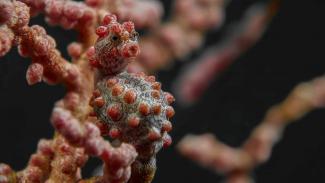
Lembeh Strait separates little Lembeh island from the north-eastern shores of Sulawesi. It is famed for its exceptional muck diving.
The coastline either side of the Lembeh Strait has a rugged beauty, but it is the action below the waves that draws divers here.
Maumere
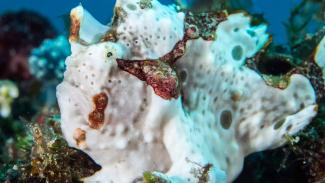
Maumere is a beautiful bay on the north coast of Flores. It is an area that is famous for its diversity.
Sperm Whales, Pilot Whales, Dolphins & Whalesharks cruise the bay, good encounters with Sharks & large Rays are possible and there is a wealth of macro life to keep any diver fascinated for hours.
Ambon & the Banda Sea
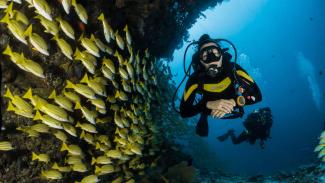
The Banda Sea is a deep sea ringed by islands in eastern Indonesia. Right in the middle of the sea are the Banda Islands, while Ambon lies to the north.
While they may seem incredibly remote, they were once world famous as the Spice Islands, where nutmeg & mace - much sought after in those days - were grown & fought over by colonial powers.
Bunaken National Park
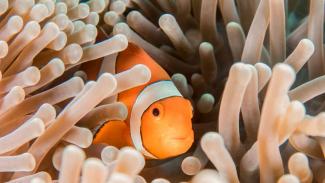
Situated off the northern coast of Sulawesi, Bunaken provides a variety of excellent dive sites.
A marine park since 1991, it is one of Indonesia's most famous diving spots.
The nutrient-rich waters result in vibrant and healthy reef eco-systems, with a high level of bio-diversity and superb marine life sightings.
Pulau Weh
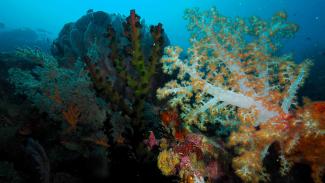
Sumatra is not as famous for diving as some of the more easterly Indonesian Islands, but little Pulau Weh offers much for the more adventurous diver.
Perched off the northern tip of Sumatra, it's position means that it is not affected by run-off from rivers and so has great visibility. It also receives a lot of nutrient rich currents, which bring with it a kaleidoscope of life.
Asia's endangered species
Tara North